Black Mulch Installation That Pulls a Whole Yard Together in Westfield IN
A lot of yards have good bones - decent shrubs, established plants, a solid lawn - but they still look a little rough around the edges. The beds look faded, the lines are undefined, and nothing really ties together. That's exactly the kind of situation where fresh mulch does more work than most people expect.
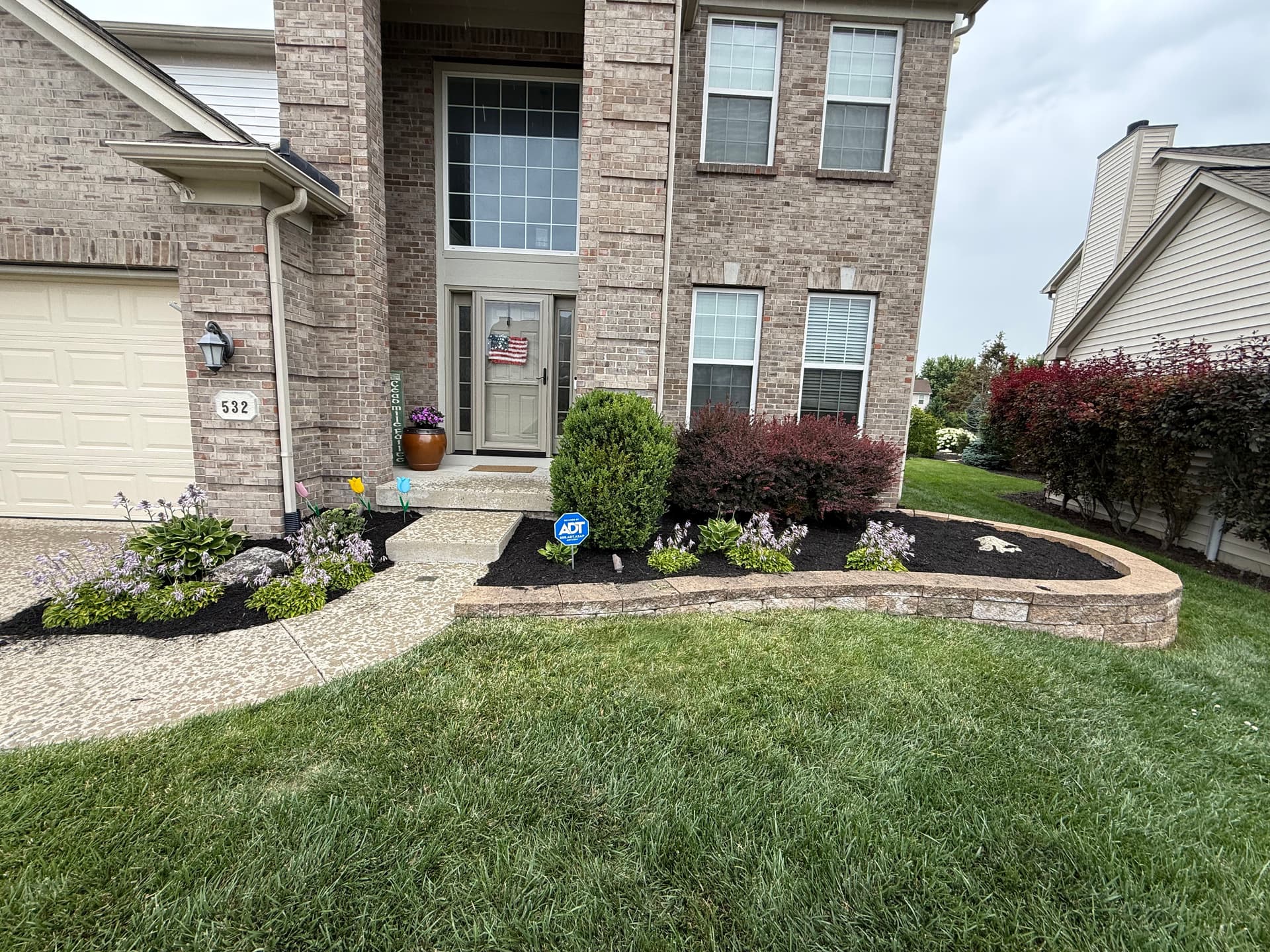
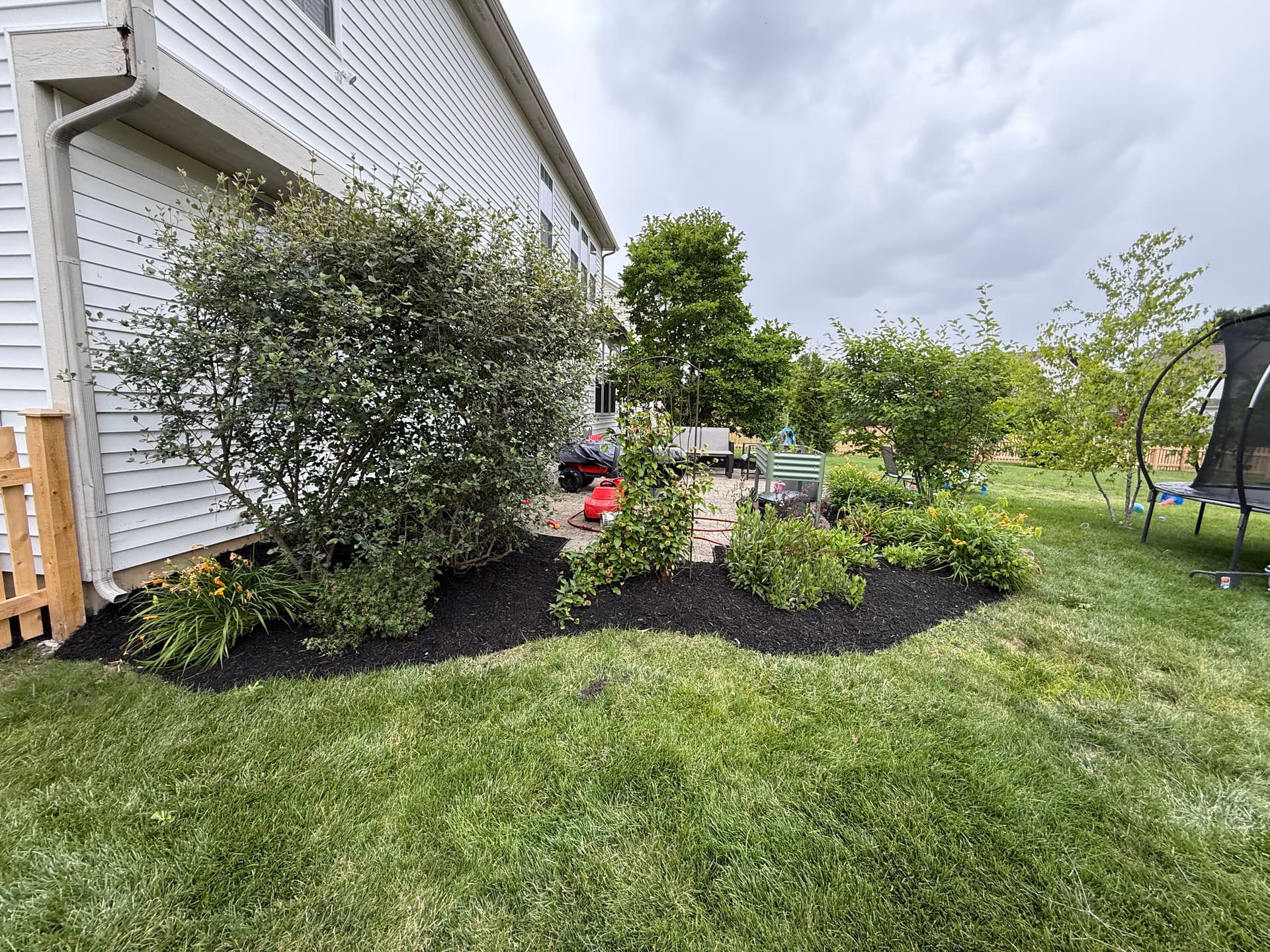
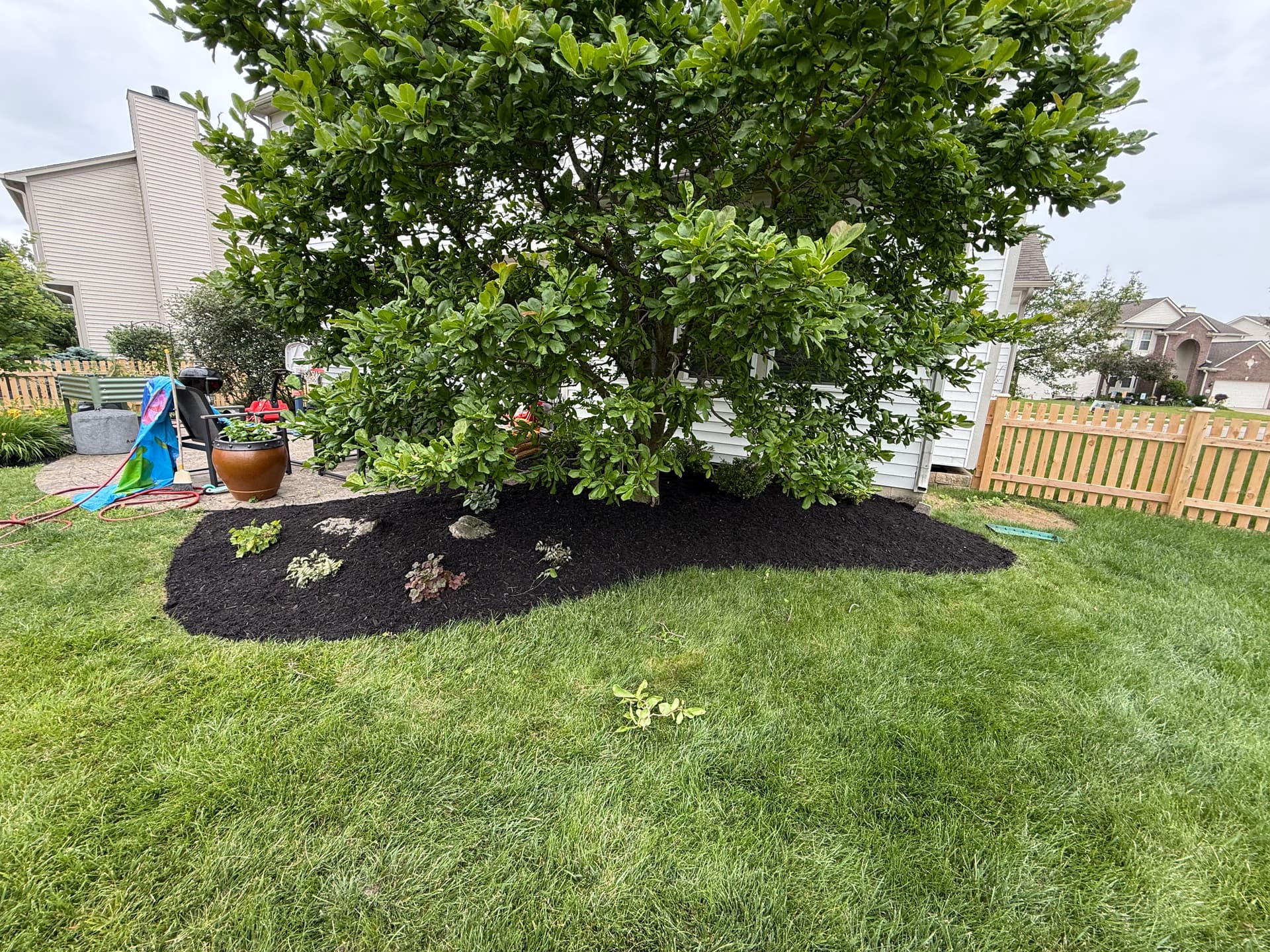
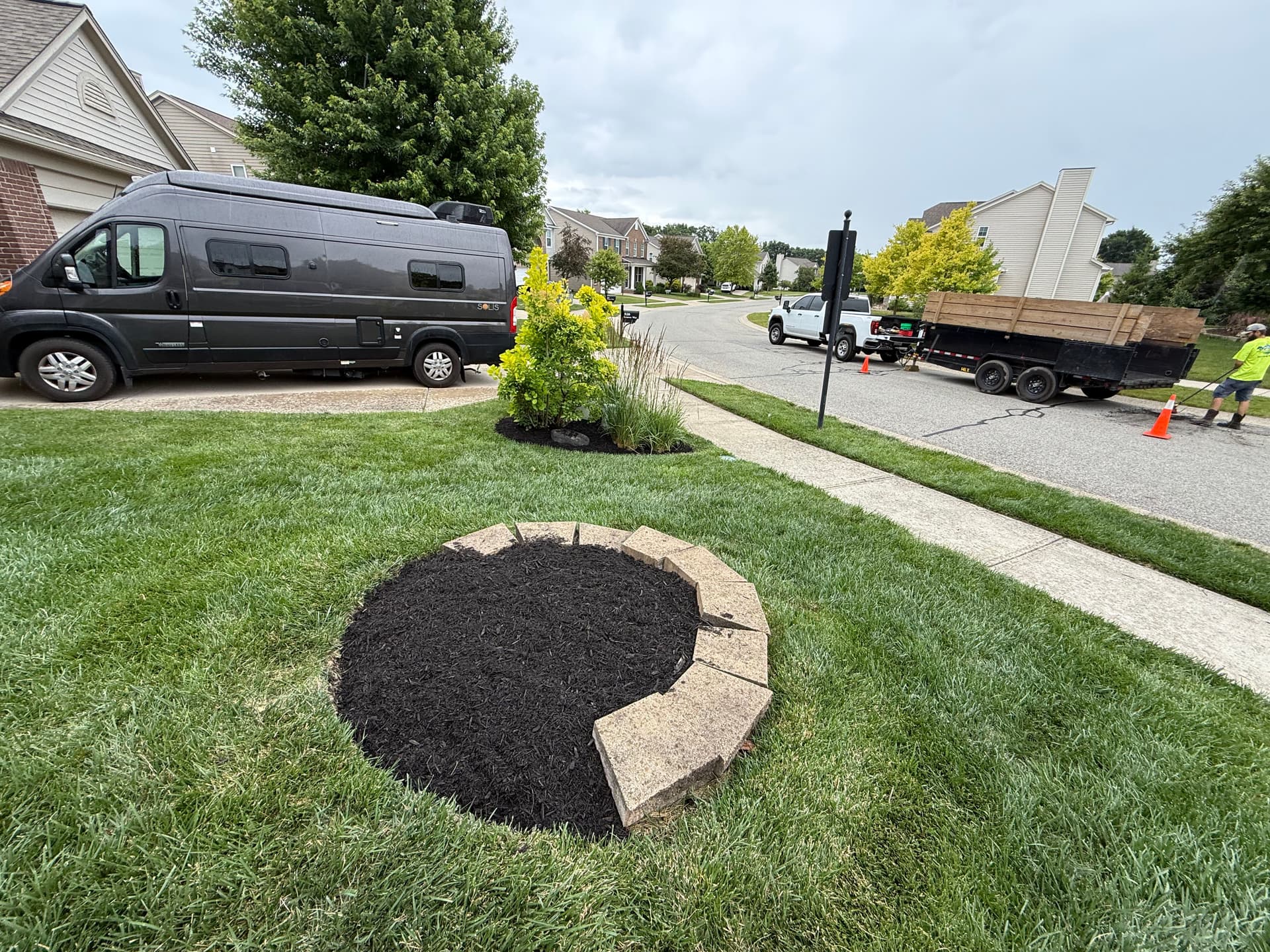
We covered the full property on this Westfield job. Front beds along the walkway and the stone retaining wall, side beds running along the house, a large tree ring out back, and a curbed island bed near the street. Each area got a clean edge and a fresh layer of premium black mulch spread evenly throughout. Black mulch is our go-to recommendation for properties like this one - it creates sharp contrast against green grass and makes every plant pop.
The front of the house is where the difference really shows. The stone retaining wall beds have a mix of hostas, ornamental shrubs, and perennials, and the deep black mulch ties all of it together without competing for attention. Clean lines where the mulch meets the lawn, uniform depth throughout, no patchiness. It just looks finished.
Out back and along the side of the house, we worked around established shrubs and groundcover plants. Mulching around existing landscaping takes a little more care - you have to work around root zones, watch depth near the base of plants, and keep the edges looking intentional rather than just dumped. We treat every bed the same whether it's visible from the street or not.
Black mulch also does real work beyond the aesthetics. It holds moisture in the soil, helps regulate ground temperature, and slows weed germination - all things that matter during the growing season. A well-mulched yard is easier to maintain and keeps your plants healthier. That's the part that doesn't show in photos, but homeowners feel it every week they spend less time pulling weeds.